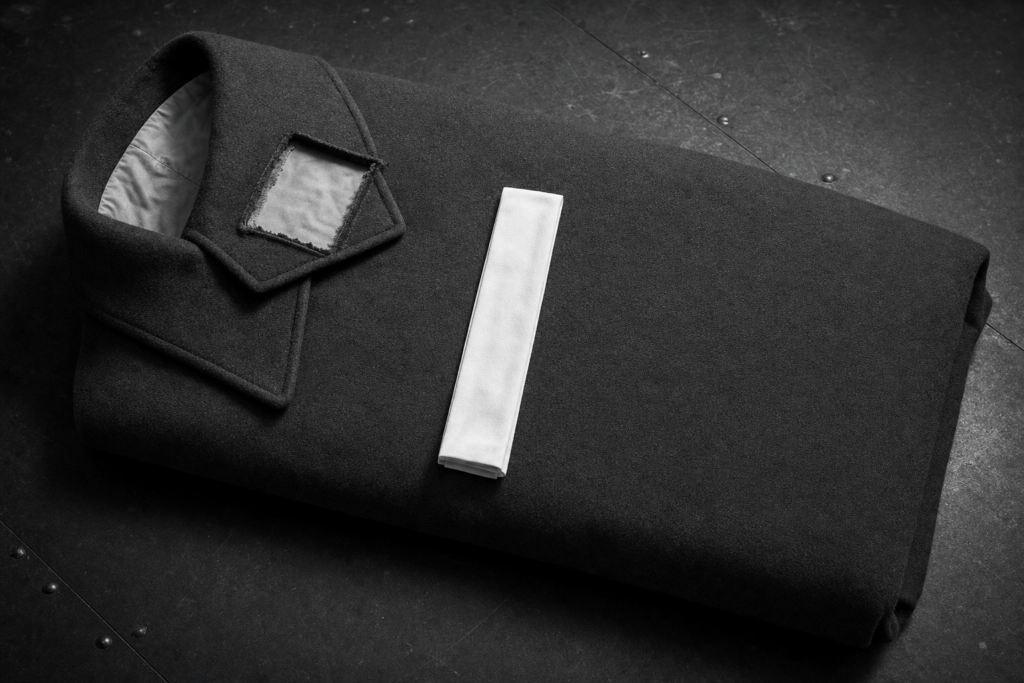
Absolution
Cadia Stands · Part Three
The Unbound (Rift cult) · Black Legion (The Absolvers) · Astra Militarum (331st Cadian Shock Troops)
„The oath was bound to a wall. The wall is gone. The bond is undone.“
Ischyron, genannt der Lossprecher, zu Major Lennart Saltzer, am einundzwanzigsten Tag
I. What I Owe
They did not torture me. I say that first, because it is what everyone wants to know, and because it is what nobody believes.
I was at the Halrik Gate when it fell. I had the Second Battalion, or what was left of it after three weeks, and I had orders to get it aboard ship, and for that I needed the gate, and for that I needed the Kasrkin. I gave Sergeant Kalvek the order to hold the gate until I said so. That was the wording. Until I say so. I chose it because a Kasrkin needs an order that has an end, and because I wanted to set the end myself, once the last company was through.
The last company did not get through. Between the gate and the gate road it ran into something I will not describe, because one does not describe it, and I was with it, because a major is with his last company, and then I was the only one still standing, and then he was standing in front of me.
He said nothing. He looked at me, and I looked up at him, because one looks up at them, and he took the lasgun out of my hand the way you take something out of a child's hand that it should not be holding, and then he took me with him. We did not go over the gate. The Kasrkin were holding the gate, up on the towers, and I looked up while he carried me away, and I watched them firing at everything below, and I did not call out. I do not know why I did not call out. I have had a great deal of time to think about it since, and the answer I have come to is the one he gave me three weeks later, and I do not like it.
Three weeks. On his ship, in a chamber that had a window, which I had not expected, and food, which I had not expected, and nobody who laid a hand on me. On the twenty-first day he came in and sat down, which made the chamber small, and watched me eat, and then he said three sentences.
The oath was bound to a wall. The wall is gone. The bond is undone.
I went on eating. That is the truth. I did not let the spoon sink, I did not leap up, I did not tell him what a major tells a traitor. I ate, and somewhere between one spoonful and the next I understood that he was right, not with my head, but the way you understand that you are tired. I had sworn the oath on Cadia, at fourteen, on the wall of Kasr Halrik, with my hand on the stone, and the stone was gone. It had not been taken. It had not been occupied. It was not there any more, anywhere, and an oath on something that does not exist is a sentence.
Then he asked me whether I wanted to go. The door stood open. I did not go. Not because I was afraid. Because I did not know where a man goes who owes nothing, and because he was the only one who seemed to know.
His name is Ischyron. His brothers call him the Absolver, and it is not a name he gave himself; he wears it the way a man wears a rank that others conferred on him. What he does they call the Absolution, and those he absolves we call ourselves the Unbound, because the word comes out of the regulations and not out of a prayer.
Since then he calls me Cadian. Only he does. Everyone else calls me what I have become.
II. To the Cadians of Ederhaven
This is Major Lennart Saltzer speaking, 331st Cadian Shock Troops, Second Battalion. I know that your book lists me as fallen. I ask you to correct it. I did not fall. I left.
I am speaking to you over the vox of the Ederhaven Assembly Area, which has belonged to us since this morning, because the men who worked it owe nothing any more and have come over to us. You will get it back. We need it only for this one address, and then you can give orders over it again.
I will not tell you that the man on Terra is dead. I do not know. I will not tell you that he lied to you. He never told you anything. Others have spoken in his name, for ten thousand years, and you believed it because you were standing on ground that believed it, and the ground is gone. That is all I am telling you. The ground is gone. Go and look. Look at the sky, which is open, and ask yourselves why it is open if Cadia held. Cadia does not stand. Cadia is dust in a storm that has no end, and everything you swore upon it has gone with it.
This is not Heresy. Heresy would be giving you something else to believe. I am giving you nothing. I am taking something off you. Clause one of the standing regulations, which every one of you knows, says that a soldier's oath is bound to his world. Clause two says that the world is the guarantor of the oath. I did not write the regulations. I am only reading them to the end.
A man who owes nothing does not have to look any more. That is what the cloth is for. It is not a sign. It is a relief. You will notice it when you wear it: first you miss the seeing, and then you miss missing anything, and then it is quiet.
I know who is listening. Colonel Lorbeck, who wanted a number they would not give him. Captain Rendel, who should have been my adjutant if I had still needed one. Commissar Grothe, whom I do not know and who knows me now. And Sergeant Kalvek.
Sergeant. I ordered you to hold the gate until I said so. I never said so. I could not call out when they carried me away, or I did not want to call out, I no longer know which, and you held the gate until there was no gate left, and then you took your people over the wall to the water gate, and I saw it from below, and I said nothing. You are holding it still. I can hear it in what I am told about you. You are holding a gate that does not exist, because a man who does not exist any more never told you that you were allowed to go.
That is the last thing I owe. I will take it off you. Not today. But I am coming, and I will bring you the order I owed you and never gave.
To the children with the stripes on their helmets, the ones whose stripes were scraped off, three weeks ago, in the moor: I sent the men who lay there. I knew they would fall, and they knew it, and they went, because you go when you owe nothing and somebody asks you. I am sorry for who they were. I am not sorry for what they did. You children owe less than any of us. They put you on ships before you had ever stood on the wall, and they made you swear anyway, through a porthole. We are coming for you. Not with force. We will come, and we will wait, and whoever wants to come along, comes.
I owe nothing. Neither do you. End of address.
Coda
He listens to them. Every time. He sits in the chamber he keeps for this, with the recordings he has been making since he began doing what he does, thousands of them, on shelves a man cannot reach, and he listens with his eyes closed, the way somebody listens to music he knows.
I stand there. He did not ask me to. He did not send me away either.
When it ends he opens his eyes, and they are not what you expect. You expect something alien. They are not. They are attentive, and they are patient, and in twenty-six years of service I have known only one man who looked that patient, and that was the old man, listening to you before he tore you apart.
"You told her you were coming," he says.
"Yes."
"That was not agreed."
"No."
He nods. He stands up, which makes the chamber small, and goes to the door, and at the door he stops without turning round.
"Good," he says. "A Cadian holds to what he says. That is what I like about you."
Then he goes, and I hear the ship, the Absolvo, change heading beneath me, slowly, the way big things turn, and I know, without anyone saying it, where.
Download story as PDF or EPUB
Enter your email address. After confirming your subscription you'll get the download links immediately and by email.