Excipio-Phi-Tau
“What got through goes no further. We move without friction and pay threefold for it. The roll says cohorts; the field holds maniples. It ends here.”
Core Identity
| Founding | c. 480.M32 (raised during the war years M32.4 to M32.8) |
|---|---|
| Homeworld (name) | Stollenhall – ruled by the Slag Brethren |
| Combat doctrine | Interception (Excipio: it stops what got through) |
| Chapter strength | Under strength (cohorts on paper, maniples in fact) |
Further core facts
| Fact | Value |
|---|---|
| Designation | 7th Macroclade of Stollenhall |
| Epithet | "The Firebrakes"—coined by T'au forces, not meant as an honour |
| Forge World | Stollenhall |
| Tech-Priest Dominus | Enginseer Tolvantik |
| Legion Strength | 2,847 Skitarii (establishment strength: 4,200) |
| Cohorts | 4 (on paper; three operational) |
| Preferred Doctrina Imperative | Hazard Optimisation (Gamma protection) |
| Allegiance | Adeptus Mechanicus |
| Mechanicus Designation | MECH-STOL-7-ExPT-M32.1 |
Core Data
The 7th Macroclade of Stollenhall was raised at the behest of the Iron Warriors to intercept breakthroughs by the T'au Empire before they reach the primary production zones. Its task is not conquest or field dominance—it is interception. The Lubricae Cult shapes its rites: every weapon is understood as a living tool of lubrication, every movement an act of soothing the machine spirit. Excipio-Phi-Tau was raised during the war years M32.4 to M32.8 at heavy cost and has been maintained below establishment strength ever since, because Stollenhall lacks the manufacturing capacity to replace losses quickly.
Lore & History
Homeworld description
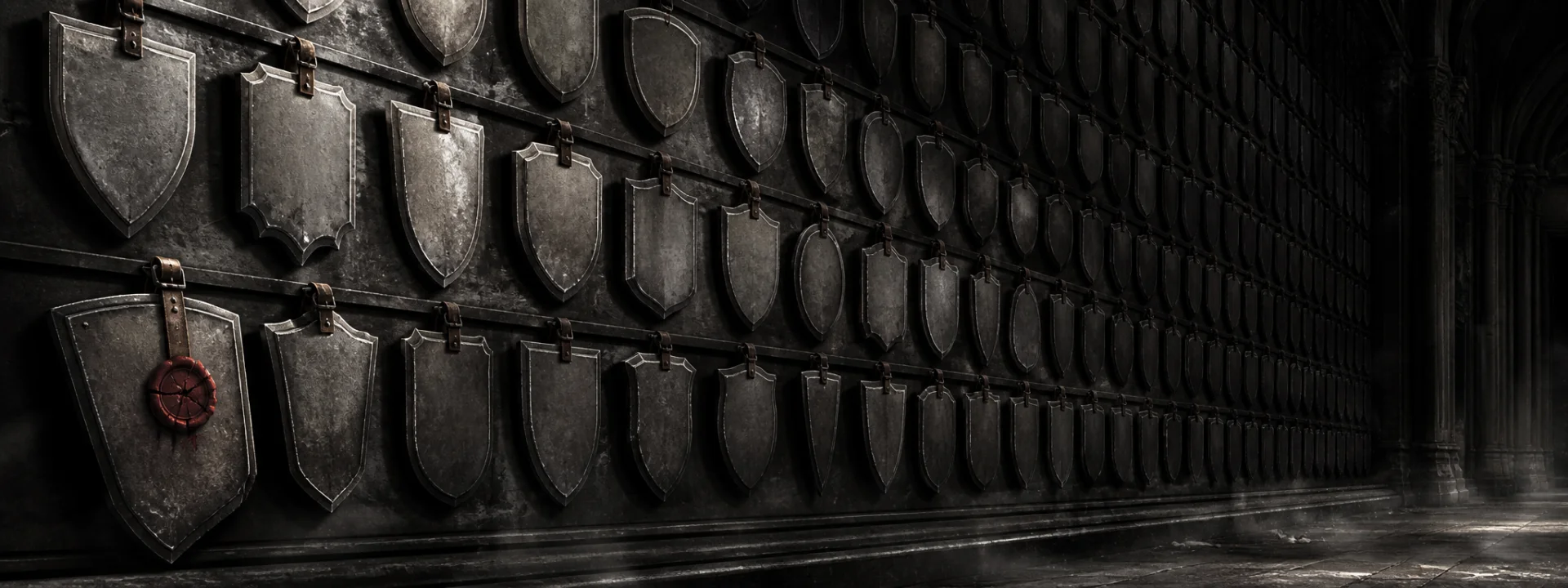
Stollenhall is a goods forge of middling importance, under Slag Brethren control since M28, exporting chiefly plate steel, storage structures and gearing mechanisms for Imperial ships. The planet's tithe consists of standing macroclades whose losses Stollenhall replaces continuously: four maniples of Skitarii per decade and two cohorts per century; in the last four hundred years Stollenhall has paid threefold to halt the T'au expansion. The available manufacturing capacity for augmetics and weapons is running at ninety percent, while the supply of raw materials has been strained since M34.
The Lubricae Cult dominates the priesthood of Stollenhall. Its teaching—that the Omnissiah reveals himself in the smoothness of motion, and that every act of wear is a disregard of the machine spirit—colours every field ritual of this macroclade. Where other worlds understand Hazard Optimisation as reckless acceleration, Lubricae teaches here: “Speed without friction.” The Conversion Council does not reject this doctrine, but it stretches the preparation of new Skitarii to nine weeks—time the war situation does not always allow.
What the world takes from its own people
The conversion chambers of Stollenhall draw their intake from three sources. First: the levy, held twice per Terran calendar year, in which about one in two hundred is drawn from the factory districts. Second: the maimed. On a forge world workers break and burn themselves every day; those whose lesions are severe enough are put to a choice—retirement in the servant community, or conversion. About sixty a year accept conversion. Third: volunteers from those who see no other way to rise. The procedure takes nine weeks under the Lubricae directive. A little more than half of the intake is completed. The rest are logged as servitor stock or as an organ store. File reference VK-M34.7-Kohorten-Gamma-11.
Companies
Companies
Name Cohort Gamma-11
Role Skitarii Rangers
Hero name Ranger-101-Lambda
Name Cohort Kappa-04
Role Skitarii Vanguard
Hero name Dragoon-73-Eta
Name Lumen Rotae
Role Kataphron Breacher
Order of Battle
On paper, the 7th Macroclade is divided into four—four Cohorts of three maniples each. In reality, two Cohorts are at full strength (two maniples each, with 18–22 Skitarii per maniple), one Cohort operates with a single maniple of only nine Skitarii, and a fourth Cohort has existed only in the papers of the Munitorum since the loss on Tsade Prime in M33.4.
Cohort Gamma-11 (commanded by Alpha Primus Luft-23-Kappa): three maniples of Serberys Sulphurhounds (close-combat cavalry), specialised in rapid envelopments. Focus: interception of T'au infiltration columns on flat terrain.
Cohort Kappa-04 (commanded by Alpha Primus Volt-88-Theta): two maniples of Sydonian Dragoons (walkers with taser lances), reinforced by one maniple of Praetorians (combat stimulants, deployment duration 14 minutes). Focus: breakthrough suppression on elevated terrain.
Cohort Delta-08 (commanded by Tech-Priest Dominus Valder): one maniple of Kastelan Robots (four units, two under Cybernetica Datasmiths), two maniples of Electro-Priests (Corpuscarii rite), supported by one maniple of Secutarii on loan from the Titan Legion Graia-Primus. Focus: air defence and energy-weapon suppression.
Cohort Phi-07 (only on paper since M33.4): dissolved after the loss on Tsade Prime. Still carried in establishment-strength planning, but not available. Reassignment to secure has been pending for three decades.
The Discrepancy: Cohort Phi-07 exists only in the registers. All attempts to rebuild it have been blocked by shortages of raw materials. Stollenhall still lists four Cohorts because the Administratum reassignment has not been formally completed.
Establishment strength: 4,200 Skitarii + 18 Kastelan + 8 Sydonian Dragoons + 12 Skorpius Disintegrators. Current: 2,847 Skitarii + 4 Kastelan (functional) + 3 Dragoons + 2 Disintegrators. The remaining war machines are in reserve or cannibalised.
The Skitarii
Recruitment takes place by three routes. The Mensal Levy draws one hundred and thirty labourers each year from the factory districts, without choice. Conversion candidates from the casualty chambers (burns, crush injuries, amputations) choose between retirement and conversion. Volunteers with no other path of advancement apply in writing; roughly two per cent are accepted.
Conversion takes eighteen days under Lubricae ritual. An entire forearm is severed and replaced with servitor parts, both eyes with optical sensors, the spine lengthened by two lumbar vertebrae, the circulatory system fitted with synthetic regulators, and the nervous system linked to auditory binharic channels through doctrine implants. The Lubricae rite demands acoustic calibration throughout—every suture is sung during integration. A Skitarius remains fit for service for about sixteen years before degenerative faults overload the implants. The average length of service, however, is fourteen months before combat loss.
This Macroclade fields three unit types: Serberys Sulphurhounds (close-combat cavalry, fast, short range), Sydonian Dragoons (heavy walkers with taser lances for intermediate terrain), and Praetorians in Skitarii pattern (briefly combat-enhanced by chemical implants, maximum deployment duration 14 minutes, followed by tissue decomposition). No Rangers or Vanguard infiltrators—the mission demands throughput speed and close-combat effectiveness rather than reconnaissance.
Ranks: Alpha (squad leader), Alpha Primus (maniple commander), Skitarii Marshal (Legion deputy). Tech-Priest Dominus Tolvantik commands the entire Macroclade. There is no true officer staff by soldiers' standards—the command structure is heavily simplified; Tolvantik issues directives to the four Cohorts, and the Alpha Primuses each lead their own troops. All orders pass through noosphere transmission in binary encryption.
What Is Not Skitarii
The Battle Congregation of this Macroclade consists of four components.
Kataphron Breachers: one maniple (six units), heavy assault infantry with thermal cannons. They answer to Enginseer Valdus and march as part of Cohort Delta-08, but are not integrated into the Skitarii chain of command—their functions follow their own firing patterns.
Kastelan Robots: four units under two Cybernetica Datasmiths (Magos Corvin and Magos Hellast). They are preconfigured with doctrina wafers and can act only within their programmed parameters. In practice they stand outside the direct control of the Dominus; the Datasmiths are their true superiors.
Electro-Priesthood: two squads of Corpuscarii (roughly 8–12 priests per squad), who discharge lightning weapons under ritual invocation. They answer Enginseer Valdus with the same formulae, but their internal ranks and initiation rites follow precepts outside the Mechanicus hierarchy—they are believers in the pure ritual of energy.
Secutarii: on loan from the Titan Legion Graia-Primus, one maniple of heavy infantry in carapace armour with lightning lances. They serve as protection for the robot units and are formally not subordinate to Tolvantik, instead receiving their orders through a deed of loan signed by the Princeps Maior of the Legio.
The Legio Cybernetica is a specialised teaching order of the Adeptus Mechanicus and makes no claim here to superior command over the Macroclade. The Datasmiths are responsible in practical terms for their robots, not for the Macroclade's strategy. This means: Magos Corvin and Magos Hellast can refuse to move their Kastelan if an order violates the STC directive, but they cannot reconfigure the maniple.
Doctrina Imperatives
Hazard Optimisation (Gamma class) is the lowest protective setting and the highest level of aggression. It sharpens reaction speed and sends strong stimuli to the pain-suppression centres; at the same time, defensive logic is throttled. A Skitarius under Hazard Optimisation moves roughly forty per cent faster, but aims more slowly and sustains thirty per cent more wounds. The holding duration is unlimited, but sustained deployments of more than six hours lead to neural overloads; replacement implants cost roughly two months' wages in raw material per damaged device.
The Lubricae Cult does not understand Hazard Optimisation as reckless acceleration, but as "rhythm without resistance"—a theologically gentle interpretation of a hard matter. It is a compromise that shortens deployment time but improves the rate of recovery.
Concrete example: Battle for Rostbach, M33.9. Cohort Gamma-11 was to intercept a T'au battle group before it reached a factory sluice. The order for Hazard Optimisation came eleven minutes too late—the Skitarii were set to standard response and were too slow. The T'au concentration of fire broke through, and three Skitarii were torn apart by wounds in the pursuit that followed. Hazard Optimisation would have brought speed, but would also have cost two further casualties through overload. From this misjudgement comes the current doctrine: Hazard Optimisation does not "wait for orders"—it is set proactively at the slightest hazard event.
War Machines
Operational Vehicles:
- 2 Skorpius Disintegrator (hover tanks with disintegrator, electronic regulation missing on both, emergency controls manual)
- 3 Sydonian Dragoon (heavy walkers with taser lance, one in service reduced to tripod operation)
Kastelan Robots:
- 4 active units (2 fully functional, 2 under repair since M34.2)
Reserve and Cannibalisation:
- 2 further Skorpius Disintegrator (parts repurposed for ammunition storage)
- 2 Sydonian Dragoons (both legs detached, idle in hangars of the sector workshop-city for sixty years)
- 1 Onager Dunecrawler (tesla cannon removed, chassis converted to supply carrier, no combat value)
Titan Legion on Stollenhall: Legio Graia-Primus of the Collegia Titanica, a separate formation with its own command and its own oath. They sit on the same world, but they do not command the 7th Macroclade and accept no orders from Tech-Priest Dominus Tolvantik. Legio Graia-Primus is a Warlord Legio with four Titans of operational strength and numerous Warhound scouts; a maniple of Secutarii is on loan to them for security duties.
Named Killclades
Cohort Gamma-11, Serberys Sulphurhounds:
The Lumen Rotae ("Wheels of Light"), four Serberys Sulphurhounds under the command of Ranger-101-Lambda, an aggressive squad leader from the original M32 raising. They owe their name to the T'au operational records, which described them as "Burning Wheels"—because under Hazard Optimisation in Rostbach they rode several times through T'au fields of fire and their carapace plates glowed in the near-explosions. The name was meant as a warning; the Lumen Rotae bore it thenceforth as a distinction.
Cohort Kappa-04, Sydonian Dragoon:
The Dragoon maniple under Dragoon-73-Eta is known as Spulenkranz (Coil Wreath)—a technical term from the Lubricae rite for the "circle in which energy turns without resistance." They have disrupted dozens of T'au infiltrations in the Wolfenau region in three years; no enemy name has been recorded, but Imperial observers call them "the Dancing Riders", because their taser lance patterns recall ritual turning movements.
Cohort Delta-08, Kastelan Robots:
The robot quadrant under Magos Corvin bears internally the designation Fünfte Binde (Fifth Bond)—a binary designate with no direct equivalent in Gotico-Lingua. The enemy calls them "Coral-bound Mesh" or "Wire Puppet", without honour. For their rigidity and their unyielding deployment they are held to be the most inflexible and the deadliest component of the Macroclade.
Notable Characters
Characters
Name Tolvantik
Title/role Enginseer
Campaigns
Campaign One: Rostbach, M33.8–M33.9 (14 days)
The T'au Empire landed a battlegroup (estimated at two war teams with three battlesuits per team) in the southern industrial zones. The objective was a gearworks with a strategic stockpile. The 7th Macroclade was alerted and took position for the interception; Cohorts Gamma-11 and Kappa-04 deployed, while Cohort Delta-08 set up air defence. The battle was short and bloody—three hours of continuous fighting until the T'au withdrawal. Result: T'au group driven off, no Imperial factory lost, but five Skitarii fallen, one Sydonian Dragoon disabled. Losses in maniples: half a maniple of Skitarii. The Dragoon repair took four months.
Campaign Two: Tsade Prime Relief, M33.3–M33.5 (four months on loan)
Tsade Prime, a neighbouring world, was besieged by T'au forces. The Imperial Guard demanded reinforcements, and Cohort Phi-07 was placed under the Astra Militarum in a state of war. The cohort fought for three months in bitter static positions; there was little manoeuvre warfare, much wear through attrition and ammo shortage. In the end Phi-07 collapsed under the pressure—a loss of an estimated eighty per cent of its establishment strength in three months. The survivors returned to Stollenhall but, owing to "strategic realignment", were not rebuilt; Cohort Phi-07 was consolidated on paper. Losses in maniples: three full maniples. Cohort Phi-07 has existed since then only administratively.
Campaign Three: Spurenkranz, M34.7–M34.9 (seven weeks)
A second T'au invasion landed west of Wolfenau; the number of their battlesuits was greater than at Rostbach, but the strategy was poorly coordinated. Cohort Gamma-11 and the Kastelan quadrant marched out—there were three engagements over seven weeks, and the T'au were driven into the air in two separate battles. Losses: two Skitarii per battle, no war materiel lost, but Skorpius Disintegrator One was so badly damaged by flux corrosion that it was later cannibalised. Losses in maniples: a quarter-maniple of Skitarii. The war bought the Macroclade time to rebuild, but not enough raw material to reach establishment strength.