Kasr
Cadia Stands · Part Five
Astra Militarum (331st Cadian Shock Troops) · Black Legion (The Absolvers) · The Unbound (Rift cult) · Imperial Navy
„I absolve no one. I am a sergeant.“
Feldwebel Runa Kalvek im Hof des inneren Torkopfs von Kasr Nihil, dritter Tag
I. Six Days
"Six days," said Lieutenant Colonel Rendel, "because the cruiser needs six days until the second ship is here. Not because anybody is counting the twenty thousand."
He said it in the hold of the transport, in front of the officers and the sergeants, with the chin he still pushed out although he had been leading a regiment for two years and nobody doubted an edge any more. Above him hung a map that was not one: an auspex image of Orlach, grey on grey, a dead world of slag and pits, and on it, on a high plateau, a patch that was too regular for something the world had made itself.
"The Lord Admiral calls it Kasr Nihil," said Rendel. "The Munitorum has carried it under that designation since reconnaissance found it a year ago. It is a fortress to Cadian pattern, and it was built by Cadians. By the harvested. From Ederhaven, from the other assembly areas, out of two years of harvest. Twenty thousand, reconnaissance estimates. They live in it. They built it, and now they live in it, and the Absolvers sit in the towers."
Nobody said anything. Runa stood at the edge, where Kasrkin stood, and looked at the patch.
"The cruiser will break it open from orbit. That is the battlegroup's order, and the order is correct, and I did not contest it. I asked for six days. The Lord Admiral gave them to me because he had them anyway." Rendel looked into the room. "In six days the 331st Cadian Shock Troops will get out whoever wants to get out. Whatever is still inside after that is inside."
"And whoever does not want to get out?" somebody from the Ederhaveners asked.
"He is inside," said Rendel.
Then the disposition. Runa heard it the way she heard everything, by halves, because she was looking at the patch. She looked at it with the right eye. The left one looked at it as well, grey, without depth, the way the left one had seen everything since the Mole: the Munitorum had given her an augmetic, the cheapest there was, a lens in a plasteel mount that delivered outlines and brightness and nothing else, and that was there so the socket would not stay empty. She had learned to shoot with it by not using it. It did not get in the way. It was there the way the hellgun's cable was there.
Two thousand four hundred. That was the regiment now. One thousand and fifty of them were Cadians, because in two years in Imperium Nihilus the Three Hundred and Thirty-First had taken in whatever Nihilus space spat out in the way of Cadians, remnants of remnants, platoons without a company, companies without a regiment, and because Rendel had taken all of them without asking for the number. One thousand three hundred and fifty were Ederhaveners. The Recruited. They were still called that, out of habit, although they had been the majority for a year and although the three hundred from the first night were sergeants by now and lieutenants and in one case a captain, and although nobody could say any more exactly who was meant by it.
The First stood at a hundred and fifty. The children. They were not children any more, most of them were eighteen, and they were still called the First, and Runa still had them, although they had long had a captain, because the First had a captain and a sergeant, and everybody knew which of the two counted.
"Kalvek," said Rendel.
"Lieutenant Colonel."
"You know the ground plan."
"I have not seen it yet."
"You will know it." He looked at her, over the heads. "Reconnaissance says it is a kasr. I have never lived in one. You have lived in one. When we are down there you will look at it, and then you will tell me where one gets in, and I will believe you."
"Yes, sir."
In the evening, in the Warp, she sat with the First and the Ederhaveners of the third platoon in the hold and drew on a deck plate in chalk how a kasr is built.
She had never done that. You did not do it; you knew it. You were born in a kasr and had played on the wall as a child and had stood in the blind angle and knew what a gatehead looked like the way you knew what your own hand looked like, and you would never have had to explain it, because everybody knew it. Now sixty people were sitting around her, and forty of them had grey or brown or blue eyes and had been born on a moor, and they looked at the chalk.
"The gate," said Runa, "has two towers. Always. Three tiers, embrasures on each. The ramp comes from the right so that you turn your shield side to the gate, and that is old and means nothing any more, and it still comes from the right, because the book says so. The gate arch has a portcullis and a double gate. Behind the gate lies the gate street, straight, two hundred metres, so that the towers can see along it. On the gate street, the schola." She drew. "And here, on the left, where the ramp meets the tower wall, there is a triangle four metres across that no embrasure reaches. It is in every kasr. It is in no book, because the book does not know it is there, and it is there because the book is built the way it is."
"A mistake," said one of the Ederhaveners. Tholen, a man of forty with a farmer's neck, who had been a sergeant since the Mole.
"A blind angle."
"What is the difference?"
Runa looked at the chalk.
"A mistake is something you do not know about," she said. "The angle everybody knows. Every child in Kasr Halrik has stood in it to see whether the sentries find it. They do not find it. And under the angle lies the drain channel, because the book puts the gatehead's drain on the side nobody sees, so that the water runs away from the gate instead of standing in front of it. You can get in. You can get in if you are small enough, or are not any more and want to anyway. In Halrik they call it the Halrik Shadow. In Myrak it is called something else. It is the same thing."
The First nodded. The Ederhaveners did not. They looked at the triangle of chalk the way people look at something that has just been explained to them for the first time and that they would never in their lives have needed, and one of them asked whether the Absolvers knew about it too.
"The Absolvers did not build it," said Runa. "Cadians built it. And they built it the way we were taught."
II. The Ground Plan
Orlach had no sky you could call one.
It had something above it that was the colour of blood that has lain too long, and that moved without any wind going, and that Runa did not look at, because you did not look at it. The Rift stood over this world like a roof. Not the Rift itself; its shadow, its light, whatever you called what came down from it, and it made you misjudge distances and made the auspex lie and made the Ederhaveners, who had never seen such a thing, look up as they disembarked and then not again.
They landed thirty kilometres from the plateau, because nobody who meant to come back landed closer, and marched. Slag. Orlach had been a mining world until there was no world left that needed the ore, and nothing had remained but what had been brought out of the ground and not taken away: heaps, black, as far as you could see, pits with standing water in which the roof was reflected, winding towers standing crooked. The regiment went in column, with the eleven Chimeras and the two Leman Russ and the Hellhound and the Demolisher, and nobody fired on them for thirty kilometres, and Runa knew that it was deliberate. He wanted them to arrive.
They came to the ridge on the second day.
It was the edge of the plateau, a heap higher than the others, and from up there you could see it, and Runa lay in the slag dust beside Rendel and Grothe and Pahl with the scope and saw it, with one eye and with the other, and the one saw it sharply and the other grey, and both saw the same thing.
Halrik.
Not similar. She had expected it to be similar, a kasr, the book, two towers. It was not similar. It was the Halrik Gate, with the ramp from the right and the three tiers and the portcullis, and behind it the gate street, straight, two hundred metres, and on the gate street stood a building with a flat roof that you were not allowed on. The wall ran around the whole of it the way it runs in Kasr Halrik, with the kink to the north, where in Halrik the bay is and where here there was a pit, and even the kink was right. All of it was slag and rockcrete, black, raw, without render, and the towers had no windows because they had not needed any, and above the gate arch a panel had been left blank, smooth, where in Halrik the motto stands, and the panel was empty.
"They built it from memory," said Grothe beside her. He said it quietly. "Not from the book. From memory. By people who had lived in it."
"Yes."
"He had them build their own kasr."
"He had them build what they can build," said Runa. "That is all they can do. He knew that."
Pahl said, without looking up from the scope, "They are on the towers. Black. I count eight on the left one, six on the right, more in the arch. On the wall the ones with the cloths, at intervals, with rifles. In the gate street they are sitting."
"Sitting?"
"On the ground. In rows. I estimate two thousand that I can see. They sit and look at the gate."
"The Land Raider," said Rendel.
"Behind the gate. In the gate street, in front of the building with the flat roof. Standing across it."
Rendel looked for a long time, and then he looked at Runa, the way he had said on the ship, and waited.
"You do not get in from the front," she said. "The gate is built so that you do not get in, and whoever built it knew how. If we go onto the ramp, the towers hold the ramp, and if we break the gate open, behind it stands the Land Raider in a street that is straight so that it can be seen along. The gate street is a pipe. Whoever comes through the gate is standing in the pipe."
"So?"
"So we go in underneath before we go in at the front. On the left, in the angle, is the drain. It is there because the book puts it there, and they built to the book because they cannot do anything else. Six Kasrkin and one squad of the First go through the channel in the night, into the gatehead, under the towers. We take the lower tier of the left tower and the gate chamber, where the winch for the portcullis stands. The portcullis goes up, and the embrasures of the lower tier stop firing on the ramp. Then the Demolisher comes up the ramp and opens the gate, and then the regiment comes, and the Land Raider is still standing in the pipe, and that is your business."
Rendel nodded. He did not ask how six Kasrkin and ten of the First were supposed to take a gatehead with Astartes standing in it. He did not ask because he knew the answer was: you took it or you did not take it, and you would see. He looked at the gate.
"Who from the First?"
"Odrin," said Runa. "His squad. He knows the Shadow. He is from Halrik."
Bolland came up the ridge, bent low, with her headset round her neck, and lay down beside them and looked down at the gate, for a long time, with the face of a woman looking at a gate the way she would look at a person she still has something to settle with.
"What thickness is the double gate?" she asked.
"In Halrik it is a metre of plasteel on rockcrete," said Runa. "Here I do not know. They had no plasteel. They had what the pits gave them."
"Then it is thinner." Bolland went on looking. "Two shots. Perhaps three. I have to get up to thirty metres, on the ramp, under the towers, and the Land Raider sees me the moment the gate is open." She said it the way you say a distance. "That is the last Demolisher the regiment has. And a final notice is what you get before they come to fetch you. My father explained that to me when I was nine. I have never forgotten it."
"I know," said Runa.
"I am saying it anyway," said Bolland. "It has to be said. Your Wessik always said that."
III. The Blind Angle
They went on the third night, and the night was not dark, because the roof above it did not go dark, and so they went in the slag, in the gullies between the heaps, bent low, slowly, sixteen people, an hour for a kilometre.
Runa in front. Then Pahl, without the scope, because you did not need one in a channel. Roske with the meltagun that had been Roske's since Wessik used it on the Mole. Quint and Sieber. Terhoven, who was twenty and whom they still called the youngest. And behind them Odrin's squad: ten of the First, eighteen, nineteen, with the green helmets, and Odrin himself, lance corporal, with the face that had lost the last of its childhood out of the cheeks somewhere between the Mole and here, and with something in his breast pocket that Runa had known about since the moor.
The ditch in front of the wall was dry. In Kasr Halrik there is water in it, brackish water out of the bay, and here they had dug it because the book wanted it and had put nothing in it, because on Orlach there was nothing you could put in it. They went along it, along the wall, in the shadow of the left tower, and above them, twelve metres up, stood the embrasures, and nothing came out of the embrasures, because you did not look down out of an embrasure if you did not know there was something below.
The angle. Four metres of triangle where the ramp met the tower wall, laid in slag, without joints, and Runa stood in it and looked up and saw that no embrasure saw her, and stood still for a moment, because the last time she had stood like that she had been a child, in Halrik, for a different reason, and because it did not feel any different.
The grating of the drain was where it was.
A grid of iron they had got out of the pit, a metre square, crusted with slag, and behind it the channel that led under the ramp, under the gatehead, to the gate chamber, where everything that drained off the gate came together. Roske cut it with the meltagun, on the lowest setting, and it made a noise that Runa thought was loud, and nobody came, because the men on the towers were looking at the ramp and at the ridge where the regiment stood, and not downwards. They did not look down. They had built the towers from memory, and in memory nobody looked down.
The channel was narrow and dry and smelled of nothing, because nothing on Orlach smelled, and Runa crawled in, with the hellgun in front of her, and behind her came the others, and it was dark, properly dark, for the first time since the landing, and she was grateful for it.
Forty metres. In Halrik it is forty-two, and she had counted them as a child, with steps that had been smaller, and she counted now with her elbows, and at thirty-eight light came, from above, through a second grating, and voices.
The gate chamber.
It lay under the gate arch, between the feet of the towers, a room of eight metres in which the winch for the portcullis stood and the chains that have not existed in Halrik for a hundred years and that existed here, new, out of pit iron, and in which men were standing. With cloths. Six, seven, with lasguns they were not holding but carrying, and they stood around the winch and talked quietly, in a tone Runa knew, the tone of people who are on watch and expect nothing.
She raised her hand. Behind her it went quiet, the way it went quiet behind Kasrkin.
You did it without a rifle. You did it with the knife, from below, through the grating, which Quint lifted, slowly, and then Pahl and Sieber were up before the first of them turned round, and then Runa, and it took as long as it took, and it was quiet, and when it was over, seven men were lying in the gate chamber with the cloths still over their eyes, and none of them had called out. Not because they had not had the time. Runa could see it on the last one, the one she had taken herself: he had had the time. He had lifted his head, in her direction, the way they lifted their heads when they heard footsteps, and had waited. He had waited the way the Astartes on the ramp at Ederhaven had waited when the Demolisher came. As though it were the same thing.
"The winch," she said.
Terhoven was already there. He knew winches, he had been at the water gate in Halrik, and he looked at the chains and at the catch and said, "It works. Two men. When it is time."
"Odrin."
The lance corporal came. He did not look at the dead. He had learned not to look at the ones who fell, and he applied it, and Runa saw it and said nothing about it.
"Your squad stays here. Winch and grating. When I say portcullis, the portcullis goes up, and then you hold the chamber until the regiment is through. Nothing else. Not the stair, not the tower. The chamber."
"Yes, sergeant."
"I am going up with the five. Lower tier, left tower. We take the embrasures that bear on the ramp."
"And the upper ones?"
"The upper ones are Astartes," said Runa. "Those we do not take. Those we keep off the lower ones until Bolland is through. After that we will see."
Odrin nodded. Then he said, quietly, so that the others did not hear it, "Sergeant. When the regiment is through. The building with the flat roof."
"I know."
"I want to go there."
"Hold the chamber," said Runa. "Then we will see."
The stair to the tower was narrow and winding, as in Halrik, and she went up it with the hellgun, and behind her Pahl and Roske and Quint and Sieber, five Kasrkin in a stair that had been built for Kasrkin, by people who had known how narrow you made them, and on the wall of the stair, at the height of a child's head, tally marks were scratched into the slag. Short ones. In rows. The way children scratch them when they are counting how often they have been up without the sentries finding them.
Runa saw them and went on.
The lower tier was empty when she came. The embrasures bore on the ramp, three of them, with lasguns leaning there, and the men they belonged to were standing at the open side and looking out at the ridge, at the regiment, which was coming into sight now, in the fourth hour, with vehicles, with the Demolisher in front, as arranged, and they looked out the way you look at something you are expecting, and they did not hear the Kasrkin.
It took as long as it took.
After that five Kasrkin lay at three embrasures and a stair, and Runa looked down through the middle embrasure at the ramp that came from the right, as the book said, empty, grey in the light of the roof, and waited, and above her, two tiers up, an Astartes walked across a floor of slag, and you could hear every step.
"Portcullis," she said into the vox.
IV. The Gate
The portcullis went up, with a noise the whole gatehead heard, and after that everybody knew what was happening, and after that it went quickly.
Runa saw it from the embrasure, in pieces, the way you saw it. She saw the Demolisher come up the ramp, from the right, as the book wanted, with the short thick barrel to the front, and the two Leman Russ behind it firing at the upper tiers of the towers, and the Hellhound, which was still holding back because it had nothing to burn. She saw bolter fire come out of the upper embrasures of the right tower, at the Demolisher, and come off the frontal plating, and fire come out of the upper embrasures of the left tower as well, above her, and the three embrasures of the lower tier that bore on the ramp stay silent, because five Kasrkin were lying in front of them and aiming at the stair.
The stair. They came down the stair. Of course they came. Two Astartes, in black and gold, in a stair built for human beings, so that they had to stoop, and the first came round the bend, and Roske put the meltagun into his chest from four metres, and the Astartes fell down the stair, which he should not have done, and lay there, and the second stepped over him, and Quint fired, and Pahl, and Runa, three hellguns at the lenses, at the throat, at whatever they hit, and the Astartes kept coming, stooped, with a bolter he could not raise in the stair, and kicked at Quint, and Quint was not there any more.
Sieber was underneath him. He lay flat where the stair went into the room, and he fired from below, into the joint between leg and hip where the plates stopped, three times, and the Astartes went down onto the one knee, the way the one on the ramp at Ederhaven had gone down, and Runa stepped up and set the hellgun into the gap at the neck, under the helmet, and held the trigger until nothing more came.
"Four," said Pahl. She said it because it was said.
Outside, the demolisher cannon fired.
Runa saw it through the embrasure. The Demolisher stood on the ramp, at thirty metres, under the towers, and the barrel went, and the double gate got a hole a man would have fitted through, and held. Pit iron on rockcrete, thinner than Kasr Halrik, thicker than expected. The barrel went again, and the hole became a gap, and through the gap you could see the gate street, straight, and in the gate street, across it, the Land Raider, turning.
"Bolland," said Runa into the vox. "He sees you."
"I know," said Bolland. "One more shot."
The Land Raider's lascannon hit the Demolisher through the gap in the gate. Two beams, and the Demolisher's turret went black on one side, and the tank stood, and the barrel went for the third time, and the double gate was not there any more. It fell inwards, both leaves, into the gate street, and above it hung the portcullis, up, where Terhoven was holding it, and the way was open.
Then the lascannon hit again.
Runa saw it. She saw the Demolisher go up, not loudly, from the inside, the way a tank goes up when the magazine is hit, with a light that for a moment was brighter than the roof over Orlach, and then there stood on the ramp a thing that was not a tank any more, and on the flank that faced her there still stood, in white letters, neatly, the way it was done on Cadia, half of a name.
It had to be said. She did not say it. She would say it later, and she knew it, and now the gate was open.
The regiment came. Rendel led it himself, with the Second, over the ramp, past what had been Final Notice, through the gate, into the pipe, and the two Leman Russ came after and fired at the Land Raider, which fell back in the gate street because two Leman Russ were two Leman Russ, and behind the Second the Ederhaveners, and behind them the First, and Runa took the four from the tower and went down the stair and through the gate chamber, where Odrin's squad stood, all ten of them, with the faces of people who had held a chamber nobody had attacked, and said, "With me," and they went through the gate.
And then they were standing in the gate street, and in the gate street the people were sitting.
Two thousand, Pahl had said. There were more. They sat on the ground of the street, in rows, the way you sit when you have fallen in and are allowed to sit down, to the right and to the left, so that a gap was left in the middle, two metres wide, and the regiment had gone through the gap, at the double, and the Land Raider fell back through the gap, and they sat. With the cloths. Men and women and children, in field blouses, in civilian clothes, in rags, and they lifted their heads when the steps came, and they did not stand up, and they did not run, and they did not raise a hand, and the Land Raider reversed through them, over the ones sitting in the gap, and the others went on sitting.
The Ederhaveners stopped.
Runa saw it. She saw the third platoon, which came through the gate at the double, stop because there were people sitting in front of it, and Tholen, the sergeant with the farmer's neck, shout something, and them go on, slowly, between the seated, with their rifles levelled, aimed at people who lifted their heads and did nothing else, and one of the Ederhaveners, a young one with blue eyes, lower his rifle and simply walk, between them, the way you walk through a crowd, and a woman with a cloth take him by the sleeve as he passed, gently, and him stop.
"Move," said Runa into the vox, to everybody, to nobody. "Move. Do not stop. Two paces. Move."
The boy tore himself free and went.
Fire came from the roof of the building with the flat ceiling. Fire came from the roofs to the left and right of the gate street. Those were the others, the ones who fought, the inner ring, with rifles, without cloths, and they fired into the gap, at the regiment, over the seated and into them, and the seated sat, and the regiment fired back, at the roofs, and hit what it hit, and Runa saw a woman with a cloth be hit, by whom she did not know, and fall over, sideways, into the lap of the next one, and the next one laid a hand on her head and went on looking at the gate.
That was the battle for Kasr Nihil. Not the towers. Not the Land Raider, which stood at the end of the gate street and fired and fell back and fired. The gap between the seated, two hundred metres long, straight so that it could be seen along, and two thousand four hundred people who had to go through it, slowly, with their rifles levelled, at people who were doing nothing, while they were fired on from above, and who did not know where to aim, and who did it anyway.
At the end of the gate street was the inner gate. The gatehead. In Halrik it closes off the citadel, and here it closed off a courtyard, and in front of it stood the ones who fought, three hundred perhaps, without cloths, in ranks, the way Cadians stand, and behind them stood the Land Raider, and behind the Land Raider stood a man in a greatcoat.
V. The Unbound
They stood in ranks, and they fired, and they died in ranks, and Runa thought, while she went along the house wall with the four, that it was the first time since Ederhaven that any of them had fought them the way soldiers fight, and that these were the worst, because they could do it.
The inner ring. Saltzer's people, the ones for whom the cloth was no longer enough. They had the rifles of the harvested and the training of the 331st Cadian Shock Troops and of the Twelve Hundred and Seventh and of all the regiments they had come out of, and they held the gatehead the way a gatehead was held, with the towers and the ramp and the fire of the towers onto the ramp, and the regiment lay in the gate street among the seated and made no headway, because you made no headway against a gatehead, as everybody who had built one knew.
The Land Raider was the problem. The two Leman Russ had hit it three times and it had hit them twice, and one of the two was burning, and the other stood behind it and fired over it, and the Land Raider stood in front of the inner gate like a bolt and held the street.
"Roske."
"Sergeant."
"The angle."
Roske looked. On the left, where the ramp of the inner gatehead met the tower wall, was the triangle. Four metres. It was there because the book was built that way, and the men who were holding the gatehead had built it and knew it and still could not see it, because you did not see it from above. From there it was twenty metres to the Land Raider's flank.
"Meltagun at twenty metres," said Roske. "Into the track. Not into the armour, into the track, then it stops, and then the Leman Russ can take it."
"Yes."
"I have two charges."
"Then you need one."
They went along the wall, the five of them, between the seated and the house wall, where there was half a metre, and the seated lifted their heads as they went past, one after another, like a wave, and Runa did not look. Arrived in the angle, they stood in the blind, and above them the towers fired into the street, and Roske took aim, and the Land Raider's flank stood twenty metres away, black, with gold, with the eye on it that somebody had painted by hand, and Roske fired.
The track went. The Land Raider turned on the spot, like an animal that has been kicked, and stood across the street, and the Leman Russ that was still standing fired into its engine deck from behind, twice, and then the Land Raider was burning, and an Astartes came out of the hatch, and the First shot him off the hatch, a hundred and fifty rifles, and he fell back inside.
After that the regiment went forward.
It went the way it went, up the gatehead, over the ramp, under the fire, and it lost what you lost, and Runa stood in the angle and watched, because from there she could do nothing more, and then the inner gate was open, because nobody was holding it any more, and the courtyard behind it was empty but for one man.
He stood in the middle of the courtyard, in the greatcoat, with the gate badge on his shoulder that he had never cut off, and with a laspistol in his hand that he held low, and without a cloth. He had never worn one. He had not needed one.
Runa went across the courtyard towards him, alone, because she did it alone, and behind her the four stopped at the gate, and the regiment stopped at the gate, and Rendel said something over the vox, and she switched it off.
He looked older. Forty-four, she had known, and he looked sixty, with a face that had got used to something, and he looked towards her, and when she was at five metres he said her name.
"Sergeant Kalvek."
"Major."
"You held the gate."
"Yes."
"I never told you that you could go." He did not raise the pistol. "I owed it to you. For two years. I said it over the vox, I said it on the Mole, I have stood here and waited for you to come through the gate, because I knew that it would be you who came, if anybody came. I am bringing you the order." He looked at her, and it was the face of a man laying a sheet of paper on a table. "Sergeant Kalvek. You may leave the gate. I say so."
Runa stood.
She had imagined what it would be like. For two years, at night, on ships, at passing places. She had thought it would do something. She stood in a courtyard of slag, in a kasr that was Halrik, with one eye that saw and one that saw grey, and the man who had given her the order had taken it back, and it did nothing. It did nothing at all. It was a sentence.
"And now you," said Saltzer.
"What?"
"Absolve me." He said it quietly. "For two years I have absolved people. Twenty thousand. I brought them here and had them build this thing, because he wanted it and because they could not do anything else, and I watched them build it, stone by stone, from memory, and every evening I stood in the chambers and told them that they owe nothing, and they believed it, and I believed it. I owe nothing. I have said it a thousand times. It is not true any more. I owe you, and I have brought it to you, and now I am finished, and I want somebody to say it. Say it. Three sentences. You know them."
Runa raised the hellgun.
"I absolve no one," she said. "I am a sergeant."
She shot him in the chest, once, from five metres, the way you learn it, centre of the body, and he fell onto his back on the slag and lay there, with his eyes open, violet, and looked up into the roof over Orlach that he had looked at for two years, and then he saw nothing more.
She stood over him.
Behind her, at the gate, was the regiment. In front of her lay the courtyard, empty, and behind it the citadel that was not one, a block of slag, and to the right of it, where in Halrik the water gate is, a passage out to the pit, and out of the passage, she saw, the black ones were withdrawing, without hurrying, in ranks, to their landers, and were leaving their Land Raider to burn and their dead to lie, the way you leave things you do not need any more.
She looked down at Saltzer.
"Kasr Halrik has fallen," she said.
She heard it. She heard how it sounded, the word, for the first time in her mouth in two years, since the gate, since the ship: fallen. Has fallen. Over. A sentence with an end. She had thought it would do something if she said it. She stood in a courtyard and had said it, over a dead man who had wanted to hear it, and it did nothing. Kasr Halrik lay on a bay on the east coast of the second continent and had two gates, and the land gate was the larger, and it had fallen, and she stood here, and it was the same.
She switched the vox back on.
"Rendel," she said. "The courtyard is clear. They are pulling out. North, to the pit."
"I see it." Rendel's voice, with chin. "We are not going after them."
"No."
"And the major?"
"Fallen," said Runa. "Circumstance: enemy."
VI. The Blindfold
The building with the flat roof stood on the gate street where in Kasr Halrik the East Schola had stood, and Jonte Odrin knew what would be in it before he went in, because he knew what had been in it in Halrik.
The chamber had held. Nobody had attacked it. He had held ten people in a room under a gate for three hours, with seven dead on the floor, and then the sergeant had come and had said, with me, and they had gone through the gate and into the gap, and in the gap he had learned how you walk between seated people who lift their heads, and he had learned it the way he had learned everything, by doing it, and then the sergeant had looked at him, briefly, with the one eye, and had nodded with her head towards the building, and he had gone. With the squad. Ten.
It was a schola. It was built like one, with the yard in the middle and the dormitories on the outside and the stair to the roof you were not allowed on, and it was full.
Children. Not only. But children first, you could see that, in the halls, on the floor, in rows, with the cloths, like outside, only younger, and among them adults who sat with them, and they all lifted their heads when the squad came in, and nobody stood up. Jonte went through the first hall, slowly, the way you did, and looked into the faces, under the cloths as far as you could, and did not see Merle.
Not in the second hall either. In the third, one of them stood up.
A boy. Eighteen, like him, in a field blouse without insignia, without a cloth, with a lasgun that he raised, slowly, not like somebody who wants to shoot, but like somebody who knows that he is supposed to, and Jonte knew the face before he knew the name.
Bruhn.
Bruhn, who had run. In the moor, two years ago, up the causeway, and who had come back and had carried the dead and had written out the form, and who had been on the Mole, in the First, in the second line, and who somewhere between the second and the fourth passing place had not been there any more, and who had been carried as missing, because nobody knew where in between.
"Odrin," said Bruhn.
"Bruhn."
"You came here."
"Yes."
"I knew you would come. The major said so." Bruhn held the rifle. It did not shake. "I walked, Odrin. On the Mole. I did not run. I walked, with them, because they laid a hand on my shoulder and because it was the first time anybody had laid a hand on my shoulder since the commissar, and he made me carry the dead. I owe nothing."
"You do," said Jonte.
"What?"
"You owe Tetens. You carried him. You do not carry what you do not owe."
Bruhn looked at him. For a moment there was something in his face that was fourteen, and then it was gone, and he raised the rifle the rest of the way, and Jonte shot him, two paces, shot, into the chest, the way you learn it, and did not look at him as he fell. He looked at the next one.
The next one was sitting.
She sat against the wall of the third hall, between two others, in the field blouse of the Second Battalion, with the insignia still on it, because she had never cut it off, and she had no cloth over her eyes. She did not need one. Where the eyes had been there was skin, smooth, healed, old, as with the man in the moor, but not grown. Made. Somebody had made it.
"Merle," said Jonte.
She lifted her head. In his direction, the way they lifted their heads, and the face under it was hers, older, thinner, with a mouth he knew.
"I know the voice," she said.
"Jonte."
"Jonte was on the ship. They took the scholae to the ships first."
"I was on the ship. I am here."
She was silent. Her hands lay in her lap, and they did not move, and then she said, in the tone in which they all said it, kindly, tired, "I owe nothing."
"I do," said Jonte.
He knelt down. He lifted the flak armour at the front and reached into the breast pocket, where you put things that are nobody's business, and took out the cloth. It was dry now, after two years, and grey, and stiff from the peat water that had dried in it, and he unfolded it, with hands that did not shake, because he had learned that they did not, and laid it over her face, over the places where the eyes had been, and tied it at the back.
"Why," she said.
"Because otherwise you have nothing that covers it," said Jonte. "And because I carried it until something stood there. Now something stands there."
He picked her up. She was light. She had been nineteen when he saw her the last time, from the wall of the schola, going past with the company without looking up, and now she was twenty-one and weighed nothing, and he carried her through the third hall and the second and the first, between the seated, who lifted their heads, and his squad went behind him, and nobody said anything, and outside in the gate street the fire from the roofs had grown less and then stopped.
The sergeant stood at the end of the street, at the inner gate, and watched him come. She said nothing. She looked at Merle, at the cloth, at the insignia that was still on, and then at him, and nodded, once, the way you nod when something has been counted.
"Guardswoman Merle Odrin," said Jonte. "Second Battalion, Fourth Company. No longer missing."
"I will write it," said the sergeant. "Take her to the Chimeras."
He carried her to the Chimeras. Behind him, in the gate street, the first of the seated were standing up, because somebody from the regiment had laid a hand on their shoulder and had told them to stand up, and they stood up the way they did everything, and went, in ranks, with a hand on the shoulder of the one in front, out through the gate, wherever they were led. They went with the regiment the way they had gone with the others. For them it was the same. Jonte did not know whether that was good. He knew that Merle was lying in his arms and that the cloth a woman in the moor had worn now covered her face, and that he had owed something for two years and that it was paid now, and that it did not look the way he had thought, and that it was paid.
VII. The Absolver
They pulled out, and nobody went after them, and Runa went up onto the wall, because she wanted to see it.
The wall of Kasr Nihil was the wall of Kasr Halrik, with the rampart walk of slag and the merlons they had built from memory, and from up there you looked north, over the pit that lay where in Halrik the bay is, and at the edge of the pit stood the landers. Three. Black. And the black ones were walking to them, in ranks, thirty, fewer, not with their dead, not with their Land Raider, with nothing but themselves and their weapons, and they boarded without looking round, the way you board a ship that is collecting you because the work is done.
The cruiser, Rendel had said, would be in range in six hours. They knew it. They were going because they knew it, and not because the 331st Cadian Shock Troops had come through the gate, and Runa knew that as well, and it did not change the fact that the regiment had come through the gate.
He was standing on the wall.
A hundred metres from her, on the rampart walk, where the wall made its kink to the north, in black and gold, without a helmet, with the short hair, and he was not looking at the landers. He was looking at her. He had waited. She knew it the way she had known it on the rise at Ederhaven when he raised his hand: he had stood on the wall and waited for her to come up, because he knew that she would come up, and because that was the way he did everything.
She walked towards him. Nobody came behind her, because she had told nobody, and Pahl would have had him in the scope from the gatehead and had no order, and Runa gave none.
At twenty metres she stopped. You did not go closer to an Astartes who was standing still unless you intended it to be the last thing you did, and she did not intend that. She did not raise the hellgun. She held it the way she held it, and looked up at him, because you looked up at them, and he looked down, with the face Saltzer had described, and Saltzer had been right. It was patient. It was the most patient face she had ever seen, and that was the worst thing about it.
"Sergeant Kalvek," he said.
The voice was not what you expected. It was quiet. It was a voice that had never had to be loud.
"You killed him."
"Yes."
"He asked you."
"Yes."
"And you did not do it." He tilted his head a little, like somebody looking at something interesting. "For two thousand years I have absolved people. I have done it on worlds whose names nobody remembers any more, and I have recorded every absolution, and I have listened to them all, and I know what a person looks like before he accepts it. You do not look like that. You never looked like that. Not on the rise, not on the Mole, not here. I have been watching you since you held the gate at Ederhaven, because I wanted to know what that is."
Runa said nothing.
"I know now." He straightened up. "It is nothing. You have nothing that you hold on to. No ground. No sentence. You do not even say it, your people say it, and you stand beside them. You hold a gate because you hold a gate, and there is nothing underneath it, and that is why I can take nothing from you. You can only take from a person what he is carrying."
He looked at the landers. The last one was almost full.
"I could kill you. You know that I could, and you came up anyway, and that is the reason I am not doing it. It would be an answer, and I am not giving you one." He looked at her again. "You I do not absolve, sergeant. You are to carry it. All of it. The gate, the major, the children who stood up, the seated in the street, the tank. Carry it. I will come back in twenty years and see whether it has bent you, and if it has not, I will come back in forty."
He turned round and walked along the rampart walk, north, to the kink, without hurrying, without looking round, an Astartes on a wall that human beings had built from memory, and Runa raised the hellgun and fired.
Once. Into his back, into the shoulder plate, at twenty metres, and the shot hit and left a mark on the black, pale, like a scorch, and he walked on. He did not turn round. He walked as far as the kink and down the stair and across the slag to the last lander, and boarded, and the hatch closed, and the landers lifted, three of them, heavily, like things that are full, up into the roof over Orlach, and were gone.
Runa let the hellgun sink.
She stood on the wall and looked north at the empty pit and thought that he was right, and that it changed nothing. She had nothing underneath it. She had known it since the gate, since the ship, since Grothe had asked her what the sentence means and she had said that she does not say it. There was nothing underneath it, and she stood anyway, and he had watched it for two years and had not understood it, and had gone, and would come back in twenty years, and she would be fifty-six then, if she was anything then, and she would be standing or not, and he would see it or not, and it was the same.
She counted. She did it without meaning to.
Terhoven, below, at the winch. Pahl, on the gatehead. Roske, in the angle, with one charge. Sieber.
Five, with her.
VIII. The Fifth Day
Sixteen thousand two hundred. That was the figure the commissar had, on the evening of the fifth day, and it was right, because he had it.
Sixteen thousand two hundred people who had been sitting in Kasr Nihil and whom the regiment had put on their feet, one after another, with a hand on the shoulder, and who had stood up and gone, in ranks, thirty kilometres across the slag, to the landing craft the fleet sent because Rendel had demanded them and because the Lord Admiral had established that sixteen thousand Cadians in landing craft were easier to explain than sixteen thousand Cadians under a bombardment. They went. They went with the regiment the way they had gone with the Absolvers, and Grothe had written in his book that he did not know whether it was a difference, and that it did not matter, because they went.
Two thousand had fought, the inner ring, and lay now in the gate street and on the gatehead, with the regiment's dead among them, three hundred and eleven, and Grothe had the form for each of them, and in field seven, for each of them, stood what stood there.
Eighteen hundred nobody had found. They had not been in the halls and not in the street and not in the courtyards, and Runa had the suspicion that she did not speak aloud, that they were in the pit, under the standing water in which the roof was reflected, and that Saltzer had known who would not walk any more, and that he had settled it the way a major settles things.
The Kasrkin had found the chambers. Under the citadel that was not one, in a cellar of slag: shelves, the way Saltzer had described them, with reels, hundreds of them, and a chair that was too big for a human being. Rendel had ordered that they not be touched, and had had the cellar sealed, and had put the commissar in front of it, and the commissar had stood in front of it for an hour and had then said that he had not listened in, and Runa believed him.
On the evening of the fifth day the order came from the cruiser.
Rendel read it out, in the courtyard of the inner gatehead, where Saltzer had lain and no longer lay, because he had been carried away, with the others, without a cloth, because he had not had one. The regiment stood, what of it stood, and the Ederhaveners and the First and the five Kasrkin at the edge, and Grothe beside Rendel, and Rendel read.
The cruiser would not fire.
The battlegroup had no base in Imperium Nihilus between the frontier sector and what lay beyond it, and needed one, and Orlach lay in the right place, and on Orlach stood a fortress that was already built, to Imperial pattern, and the Lord Admiral had looked at the auspex image and established that a finished fortress was a finished fortress and that the question of who had built it was one for the Inquisition and not for the fleet. The 331st Cadian Shock Troops would be deployed as garrison. Until further notice. The designation Kasr Nihil would remain in the registers until another was laid down.
Rendel folded the sheet. He looked into the courtyard, with the chin, and nobody said anything, and then he said what a lieutenant colonel says: "Assignments tomorrow at five."
After that Runa stood in the courtyard for a long time.
She stood where she had stood when she said the sentence, and looked at the citadel that was not one, and at the gatehead, and at the towers that had been built from memory, with tally marks on the stair wall at a child's height, and understood what the order meant. It meant that the regiment would live in Kasr Halrik. In the Halrik that twenty thousand harvested had built for an Astartes, out of slag, with their hands, for two years, and of whom eighteen hundred lay in the pit and two thousand in the street and sixteen thousand sat in landing craft and did not know where they were going. The regiment would sleep in the halls where the children had sat, and stand on the wall where he had stood, and go through the gate that Bolland had opened, every day, and in twenty years he would come back and find them in it.
Grothe found her there.
He came across the courtyard, without his cap, because he had not put it on since the gate, and stopped beside her the way he did, as though they were looking at something together.
"You shot him," he said.
"Yes."
"He asked you to absolve him, and you shot him."
"I said, I absolve no one. I am a sergeant. Then I fired."
"I know. I heard it over the vox before you switched it off." Grothe looked at the citadel. "Two years ago I asked you what the sentence means. You said that you do not say it. I said that I would ask you again."
"Yes."
"I am not asking any more," said the commissar. "I have written it down. In field seven. For eight hundred and fifty. It is the most complete answer I have, and it stands in a form where it does not belong, and I am leaving it there."
Runa looked at him, with the one eye and with the other.
"You are not a Cadian, commissar."
"No," said Grothe. "I wrote that down as well. It did not help."
IX. Kasr
On the morning of the sixth day, at five, the regiment stood in the courtyard, and at half past five Runa went through the gate, because in the morning you went through the gate to walk the gatehead, and because the gatehead was hers now.
She went through the arch, under the portcullis, which Terhoven had let down again yesterday and raised again today, because that was what you did, and over the ramp that came from the right, and past what stood on the ramp and was not a tank any more and that nobody cleared away, because Rendel had said that it would stay standing until he said otherwise. On the flank stood half of a name. She did not look. It had to be said, and she had said it yesterday, to the commissar, for the form, with name and number, and the circumstance had been called enemy, and that was all the form wanted to know.
At the foot of the ramp stood one of them.
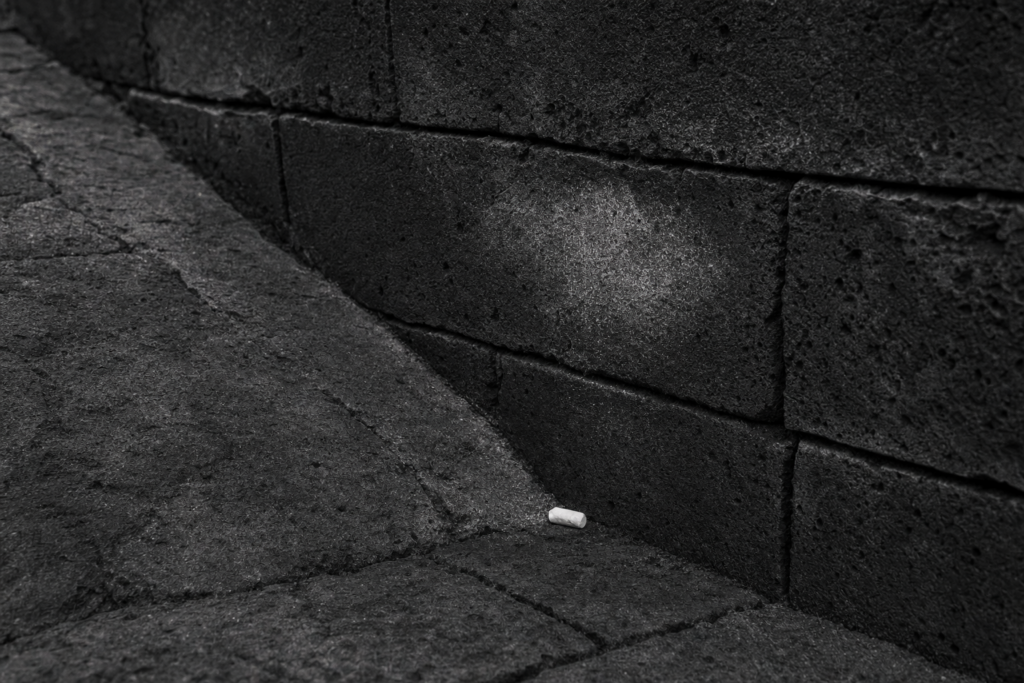
An Ederhavener. One from the third platoon that Tholen led, a young one with blue eyes, and Runa knew him, because he was the one who had lowered his rifle in the gate street and walked, between the seated, and whom a woman had taken by the sleeve, and who had torn himself free because she had said move. He stood at the foot of the ramp, on the left, where the ramp met the tower wall, in the angle, in the blind, where no embrasure saw him, and he had a piece of chalk in his hand that he had got from somewhere, out of a Chimera, out of a pocket, and he was writing on the tower wall.
He had not heard her come. You did not hear Kasrkin.
She stopped, three steps behind him, and watched.
He wrote clumsily, in big letters, the way somebody writes who can do it but does not do it often, on the black slag, where the chalk was white like a stripe on a helmet, and he wrote two words, and Runa read them as they came into being, letter by letter, and said nothing.
KASR HALRIK.
He stepped back. He looked at it, with his head on one side, the way you look at something you have written and are not sure is spelled right. Then he turned round and saw her, and everything a face can do when it sees a sergeant where it expected none went through his face, and he stood to attention, and the chalk fell out of his hand.
"Sergeant."
"Trooper."
He waited. She looked past him at the wall. At the two words, in chalk, in the blind, where no sentry found them.
She could have wiped it off. It was chalk. She could have told him that Kasr Halrik lay on a bay on the east coast of the second continent, and that it had two gates, and that the land gate was the larger, and that it had fallen, because she had said so yesterday and it was true. She could have told him that you did not call a place Halrik, because you did not call Halrik anything, you were it. She could have told him that he was an Ederhavener, with blue eyes, who had never stood on a wall until yesterday.
She looked at the two words and let them stand.
"Carry on," she said.
The trooper looked at her, and then he looked at the wall, and then at her again, and he understood that she had seen it and that it was staying, and he picked the chalk up and put it away, and he brought his fist to his chest, too hard, too straight, the way you do not learn it in a schola if you were never in one, but from the ones who were, and he said the sentence.
"Cadia Stands, sergeant."
She looked at him.
An Ederhavener. Blue eyes. Born on a moor that did not exist any more, because the Rift had gone over it, and recruited because the 331st Cadian Shock Troops had been the only ones who had done anything that night, and gone through a gate, yesterday, between seated people, and stopped, and gone on, because she had said move. He had the sentence from the others. He had heard it for two years, at parade, at meals, at the gate, and he said it the way you say it, and waited for it to be said back, because it was said back, and Runa could have done it. It was a sentence. You said it. It cost nothing.
There was nothing underneath it. Ischyron had been right. There was nothing underneath it, no ground, no stone, no bay, only two words in chalk on a wall of slag, in the blind, where no sentry found them, and an Ederhavener with blue eyes standing in front of it and waiting, and it was the same, and it was everything, and it held.
"Yes," said Runa.
Download story as PDF or EPUB
Enter your email address. After confirming your subscription you'll get the download links immediately and by email.