89th Kethros Regiment
“Fast, deep, quiet, gone. See without being seen. The ground speaks to us. No retreat — only flight forward.”
Core Data
| Regiment type | Rapid Reconnaissance (light vehicles, avoids contact) |
|---|---|
| Munitorum designation | KTH-89-MR-VXR-2847 |
| Homeworld | Kethros Agris (agri world) |
| Tithe grade | Decuma Prima – the baseline grade described in the compendium as "the customary tenth" |
| Establishment strength | 4,200 soldiers |
| Current strength | 1,680 soldiers |
| Allegiance | Renegade |
| Origin | Original regiment |
The pillars
Speed Is Mercy
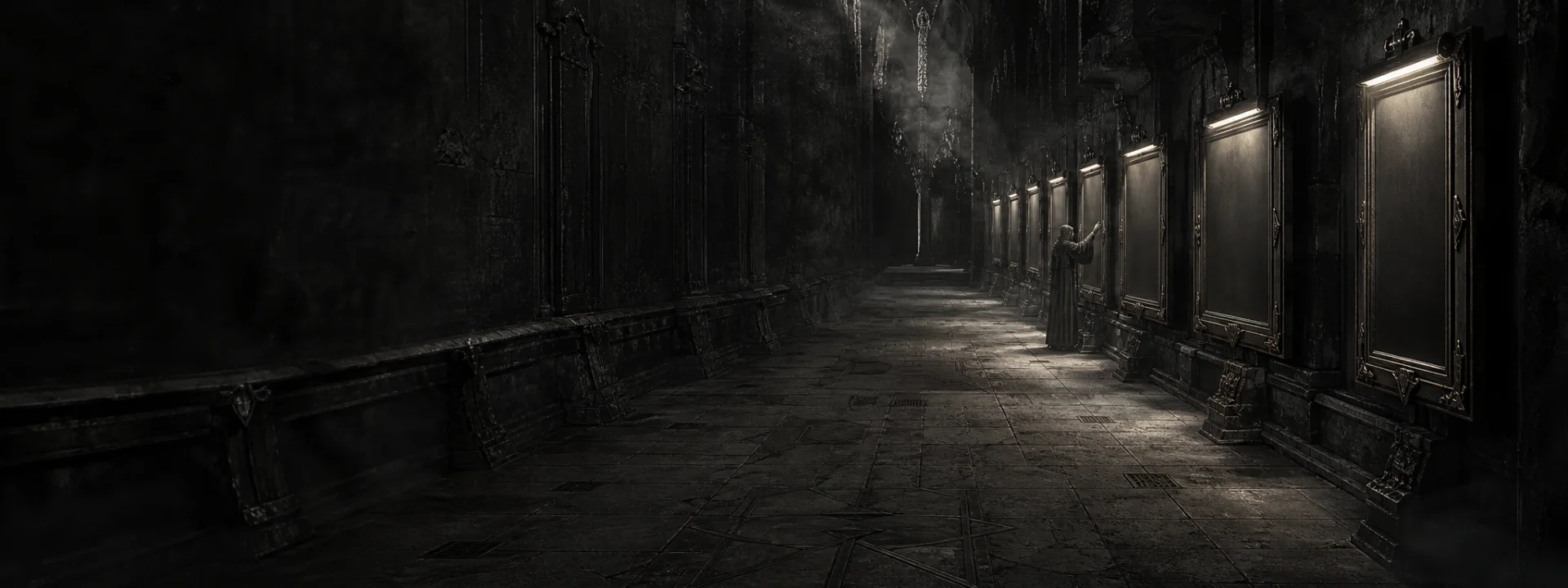
Swiftness was never a form of valour for the Tunnel Rats—it was a principle of survival. The ground of Kethros Agris is a labyrinth of galleries, watercourses and the ruins of forgotten mines. A company that stood still died in the tunnels. A company that moved—that flitted through darkness, that changed positions before the enemy could fire—survived. This principle is burned deep into the soul of the regiment. When ordered to hold a position, the officers flinch. An order to withdraw is carried out as quickly as possible—not out of fear, but because silence and movement are sacred.
The Ground Provides
Kethros Agris is a world that hungers. The grain fields supply only a quarter of what is needed; the rest comes from the wilderness regions, from hidden springs and salted stores that generations of mountain farmers laid down in the dark. The Tunnel Rats know how to survive on nothing. They eat roots unknown on other worlds. They drink water that seeps from stone. They can move for three weeks without resupply, while other regiments die after three days. This makes them ghouls who devour their own flesh, watched and cursed by other regiments.
Loyalty Has No Face
A Tunnel Rat is loyal to the name, not to the man. The colonel will change—they have seen him replaced five times in twenty years. The Warmaster will die. The Throne will be far away. But the name remains. The tradition remains. The reputation of the Rats—quiet, deadly, always hungry—that is immortal. A new soldier is not asked whether he trusts the woman who leads him. He is asked whether he is loyal to the name. Most say yes.
Betrayal Is a Survival Skill
That is the uncomfortable truth no one speaks aloud. A Tunnel Rat who has survived has learned to lie. The Tunnel Rats have set their eyes on two masters, because only two masters would ever arm a Tunnel Rat at all. They trade in the damage tithe of the Venn-Mora ruins. They speak with free traders when the ammunition runs out. They have known pilots who spoke with the Orks as well. The reputation is not a moral one. The reputation is an art of staying alive on a dying world.
Further core facts
| Fact | Value |
|---|---|
| Militarum Regimentum | Astra Militarum |
| Common name | Tunnel Rats |
| Origin of the name | Earned in battle; Siege of Kethros-Hive, M38.7 |
| Founding | M38.7 |
| Tithe class | Standard tithe (one tenth of total military strength) |
| Nominal strength at founding | 4,200 soldiers |
| Current strength | 1,680 soldiers |
| Munitorum designation | KTH-89-MR-VXR-2847 |
Raising, Homeworld & Culture
Raising & Tithe
The 89th Kethros was raised in the regular tithe—a tenth of the total military strength of the planet Kethros Agris, rounded up after the fall of the hive capital and the siege by xenos ships that are now mentioned only in field texts. The boys and girls who walked onto the loading ramps in metal chains were no better trained than any other agri world recruits—they simply came earlier. Planetary Governor Maltheus Vorn had two choices: send under-supplied troops and be executed, or take the best cave hunters and pit-walkers his people possessed and buy a staff of officers who knew what they were doing. He chose the second. The result was not courage, but rage—a deep, creeping rage at the earth that had taken them, and at every commissar who despised them for it.
What the Homeworld Lost
Kethros Agris lost an entire generation of trackers—the guild class of miners and hunters who needed a hundred years to tell a cave from a wilderness, to scent a path through rock, to find water beneath the earth. These men and women were not soldiers. They were the last living link to the realms of knowledge of the forefathers. They had names for a hundred kinds of rock and a hundred kinds of silence. They could stride in the dark. The ground spoke to them. With their levy, that language fell silent. The agri-combines of Kethros had to train new trackers—young, impatient, imprecise. In the six years since, two ore deposits have collapsed because no one knew the ground there was brittle. The hunger on Kethros has grown deeper.
The Homeworld
Kethros Agris is a second-category agri world, three quarters of its surface high mountains and a network of gorges so deep that sunlight reaches the valleys for only three hours a day. The altitude makes farming meagre and winter long—eight months of snow and ice, four months of fragile cultivation. The people of Kethros have therefore turned downward. They are mountain farmers and pit-walkers, not field farmers. The tunnels beneath the world are wider than the roads, older than the cities, and there are more underground lakes than surface rivers. A Tunnel Rat is one of these people—compact, muscular, with crowbar shoulders and eyes that can read in the dark as in the light. They move beneath the earth with the elegance of a rat in its labyrinth. They can taste water and navigate by smelling the air. They understand silence as a language. And they are proud—not of their fatherland, but of the fact that the ground belongs to them, not the other way round.
The Disadvantage They Carry
Tunnel Rats have gone blind in large spaces. In the first campaign on Venn-Mora—a flat, open desert—the 89th Kethros lost more soldiers in four weeks than in six years of the mountain-basin fighting at home. Their eyes could not see far enough. Their instincts told them: open ground means death trap. Their officers, trained in tunnel tactics, could not command open formations. A soldier born beneath stone is afraid of sky. The first regiment stationed alongside the Tunnel Rats took them for cowards, because they stayed in cover during a desert battle with a thousand metres of visibility. The colonel on Venn-Mora at the time, Kastor Helland, wrote a report on "untenable tactics and possible disciplinary measures". This report is kept in the files of the Munitorum to this day. The shame poisons every new deployment.
Regimental Culture
The Tunnel Rats do not march—they walk. A long, springing stride that can keep its balance in the side passages of mountains, that devours kilometre after kilometre without tiring. The battle song is a work song, presumably from the mines:
Rat blood runs deeper than the ground, / Higher than the stone, / Further than the water speaks, / No light, no farewell.
It is not a war song. It is a dirge. They sing it at night, when a position must be held, and the young soldiers do not understand why the older veterans weep as they sing.
A superstition runs through the regimental culture: Silence breaks blessing. Whoever speaks in battle without being asked will err. Whoever laughs when a comrade dies will die himself. Whoever sings up above beneath the sky will be heard. Commissars have tried to stamp out this belief—and given up. It is stronger than all discipline.
The barrack tents smell of earth and preserved root. The floor is always dirty, even when just cleaned. The soldiers drink their beer slowly, in small groups, and talk in whispers, even when the enemy is a hundred kilometres away. The dead are buried with their feet to the west and their heads downward, so that the ground takes them in. When there is no time to dig, the corpses are stuffed into sacks and the sacks laid beneath stones.
The Commissariat
The Tunnel Rats do not fear their Commissars—they have outlived them too long. But it is no brave contempt. It is a silent alliance. Commissars who judge too harshly vanish in the tunnels during a mission. Commissars who are reasonable always find their equipment in order, their liquor ration always full. The current Senior Commissar, Theofilus Krane, understands the rules of the game. He carries out his executions—three this year—but he chooses carefully. Always guilty. Always deserved. No purges. That is the agreement.
Ranks & Organisation
Ranks
Rank Tunnel Lord
Description
Munitorum rank: Colonel · Form of address: Lord Tunnel Lord
Rank Pit Master
Description
Munitorum rank: Major · Form of address: Master
Rank Trail Leader
Description
Munitorum rank: Captain · Form of address: Leader
Rank File Leader
Description
Munitorum rank: Lieutenant · Form of address: Leader
Rank Cave Master
Description
Munitorum rank: Sergeant · Form of address: Master
Rank Stone Knower
Description
Munitorum rank: Lance Corporal · Form of address: Knower
Structure
The Kethros 89th Regiment had 21 companies at its founding—three armoured reconnaissance companies with fast vehicles, eighteen infantry reconnaissance companies of 6 platoons each, two heavy support companies with automated artillery robots. Current strength stands at just under 1,680 soldiers, distributed across 9 remaining companies. No reinforcements have come—the last increase in troops was a merger with the remnants of the Kethros 44th in the year M41.1, since then only losses. An average infantry reconnaissance company currently has a Captain, a Lieutenant and about 160 soldiers in four platoons, instead of the regular six. The two remaining armoured reconnaissance companies field a total of eight light vehicles instead of twelve. The heavy support is lost—its four automated artillery units were destroyed in the defeat on Grath-Kelsva and not replaced.
Constituent regiments
Name First Company—the Deep-Walkers
Role / notes
Commander Captain Maris Theel, scar across the left cheek from a combat knife wound. Type: infantry reconnaissance. Status: combat-capable, but under-supplied with ammunition—three lasguns per platoon instead of the regulation five. The First has been destroyed three times and rebuilt three times; the current soldiers march under a name whose original bearers lie long since beneath the rock. Their common property is humiliation and endurance.
Name Third Company—Trackers
Role / notes
Commander Captain Dalton Veers, right eye blind from a burn injury. Type: armoured reconnaissance. Status: operational with four light vehicles, two of them with damage that cannot be repaired without halting the advance. Still bears original Munitorum colours—dark red with silver trim—because new paints are not available.
Name Ninth Company—the Last of the Venn-Mora Re-raising
Role / notes
Commander Captain Selene Moss, short-haired, a gaze that never blinks. Type: infantry reconnaissance. Status: re-founded after merging with the survivors of the Kethros 44th, M41.1. The tension between the two parent bodies of soldiers has not yet been resolved—some veterans of the 89th consider the Kethros 44th newcomers not yet properly baptised and refuse to share food rations with them. Official strength: 140 soldiers. Actual strength: about 120, because no one documented the exact losses from the merger.
Command Staff
Command staff
Name Colonel Kordan Vess
Beschreibung
Sixty-six years old, a face like worked stone, an artificial right hand of plasteel from a shot taken in the battle on Korvus-Tippe. His true tool is an old Field Leader's Staff—a good three metres of wood and steel, every battle of this regimental history carved into it. A choleric man who screams for blood when tactics demand patience. He ordered the assault on Grath-Kelsva without reconnaissance because he had seen another unit move into position "smiling". It cost forty percent of the heavy support. He tolerated no criticism—his commanding officer, who dared to question the order, was demoted and transferred to the medical crew. And yet: the Tunnel Rats follow him, because he does not dissemble. He says: "We are damned. So we damn slowly." They understand that.
Zitat
"We attack as long as we breathe. The ground will take our money if we do not."
Name Lord Commissar Theofilus Krane
Beschreibung
Fifty years old, greying, a scar straight through the upper lip that cuts his sentences into two different voices. A commissar of the old kind—he saw the fall of Kethros Hive, a lieutenant then, and believes in the necessity of battles even when they are lost. He signs the execution orders, but beside them he writes: "Justified" or "Necessary"—a distinction that may be meaningless on paper, but that tells the soldiers this commissar is not mad. With the 89th he has made an informal pact: he will not argue over tactics if Colonel Vess does not argue over the Commissariat's court proceedings. It is a lie that saves both their lives.
Zitat
"I shoot traitors. Everything else is a matter of interpretation."
Name Enginseer Mardus Halvin
Beschreibung
Forty-four years old, two thirds of his body mechanical enhancements—the left side from hip to shoulder is plasteel and servo-harness, his right eye an auspex lens. A man of the Adeptus Mechanicus, assigned to the 89th four years ago, when the automated artillery systems began to show failure rates. He speaks with the machines, listens to them, repairs them with a devotion the soldiers find uncanny. After the loss of the artillery on Grath-Kelsva he suffered a complete psionic breakdown—for three days he sat in his workshop licking an empty oil can. He is functional again now, but the soldiers say the machine spirit of his saw has since become a drunkard.
Zitat
"The machines will outlive us. That is the only comfort I have left."
Attached Personnel
| Specialisation | Number | Role |
|---|---|---|
| Commissars under Krane | 8 | Political authority, independent of the chain of command |
| Ogryn auxiliary groups | 2 (about 24 Ogryn) | Shock troops, materiel handling |
| Ratling marksmen | 3 (about 18 Ratlings) | Precision fire support |
| Field preachers (Ecclesiarchy) | 4 | Spiritual care |
| Field surgeons / medics | 11 | Medical care |
The greatest tension shows at the boundary between the Commissariat and the Ogryn auxiliaries. The Ogryn are child-minds in giant bodies—the Senior Commissar tries to regulate their "excesses", but Colonel Vess gladly uses them for swift, bloody actions while the Commissariat looks on in silence. The Ratling marksmen are different; they are respected by the Tunnel Rats as craft professionals, not as underling castes.
The Regimental Standard
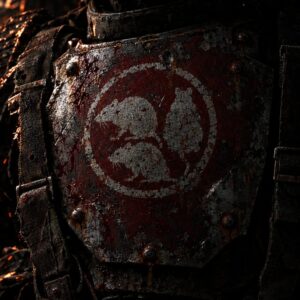
The standard is a large piece of dark red flag cloth, about two metres by two metres, mounted on a staff of high-grade metal that dates from the Age of Darkness—or so the metal assessors of the Adeptus Mechanicus claim, without altering it. At the top, the Imperial Aquila is sewn on in silver tinsel; beneath it, two ring-shaped insignia: the first shows an underground lake—the symbol of Kethros Agris; the second shows a rat in triple profile (from the side, from the front, from behind), representing swiftness and the gift of seeing in several directions at once. The standard bears four honour plates from different battles: "Siege of Kethros Hive, M38.7", "Tunnel Liberation, M39.4", "Venn-Mora Muster, M40.3" and "Grath-Kelsva, M41.1 (fought)". The last inscription is a lie—the 89th was defeated on Grath-Kelsva, not in glorious victory. It was added anyway, because the Munitorum makes no distinction between a battle in which one stands and one in which one goes under. In the sixth campaign—not documented in this dossier—the standard almost fell into enemy hands when the standard-bearer, Lieutenant Castor Valens, was struck by a lascannon salvo. The standard fell. A soldier named Kyrios Helm—a Private at the time—leapt onto the bloody remains, picked up the staff, and leapt over a rock ledge to save the standard. The 89th withdrew. Kyrios Helm is now a non-commissioned officer and appears at every memorial ceremony, but he never speaks of that day.
The Flaw
The flaw
The Tunnel Rats are shunned. This comes from a confirmed source—a letter from General Porus Halixian, then Segmentum commander, dated M40.8. After a joint operation with the 89th Kethros and the Kalthim Third, the Kalthim force was forty-eight per cent weaker in the next battle. The General wrote: "The Tunnel Rats have stolen resources. Not everything; only the critical. Ammunition, fuel, caravan provisions. They gave it back when they realised it had been noticed. This is an organised practice, not chance. I order that the 89th Kethros not be stationed on Segmentum missions with other regiments." The letter is false—not entirely false, but selectively true. Yes, Tunnel Rats took ammunition. But that was because the Munitorum allots them eight per cent less supply than other regiments, a practice that holds to this day. The letter should have caught Halixian as well—instead, only the 89th received the punishment. Since then, every barracks has refused to be assigned alongside them. They get the worst positions, the last resources, the most offensive orders—because if they are thieves anyway, one may just as well use them badly.
In everyday life this stain shows itself thus: when the Tunnel Rats march, the tent camps around them empty. Officers of all ranks avoid contact. A Captain of the 89th must ask twice to have an order confirmed that a Captain of another regiment need hear only once. In battle it shows itself worse—the 89th is routinely sent to the front lines, not because they are the best, but because commanders have reckoned that they can be thrown away without fearing a loss of trust.
Colonel Vess knows this truth. He answers it with attack. He ordered the action on Grath-Kelsva not because it was tactically right—he ordered it because he wanted to show that the 89th knocks heads off the wall like any other regiment. Instead, he lost the artillery company. The stain was not removed—it was enlarged.
A Munitorum Failure
In the year M39.2, the Departmento Munitorum sends the 89th Kethros a supply container with ration packs, ammunition crates and equipment replacements. The container is opened at the destination station and is empty except for a crate of writing paper. The paper was intended for an administrative office on the planet Korvus-Tippe—thirteen years earlier. Someone mixed up the labels, or forgot, or simply loaded the wrong container onto the wrong ship. The Munitorum apologises with a one-line memo: "Transfer confirmed. New containers will be dispatched." New containers arrived after forty-eight days. The Tunnel Rats needed the food and ammunition after forty-eight hours. They ate horse fodder they stole from a transport regiment—secretly, again, damn it all. One soldier died of spoiled hay. One non-commissioned officer was executed for the theft, because the Commissariat seized the opportunity to demonstrate discipline. The administration's paper was never a problem. The fault was this: the man who swapped the containers was never identified. No one was convicted. A soldier of the 89th died because someone elsewhere had not read a cabinet file. That is the stain that remains—not shame, but annihilation that no one was found guilty of.
Known Campaigns
Campaigns
Name Siege of Kethros-Hive (eighteen weeks)
Epoche c. 741.M38
Erzählung
Scenario and Enemies: A xenos force of unknown nature—reports call it "ships patterned after the Drukhari, but larger, older"—landed on Kethros Agris at coordinates above the capital hive, Kethros-Hive. The invasion forced the Astra Militarum and the local militias to withdraw underground. The 89th Kethros was founded out of this siege—not as an already existing regiment, but as an emergency selection of mining and cave experts who knew how to wage war in the dark. The campaign was less a battle than a slow, suffocated campaign in tunnels, where light was a weapon and the ground the only cartography.
Narrative: The Tunnel Rats learned quickly. They found paths the xenos did not find. They used explosives to collapse entire networks of passages. They dug pit traps. They waited. The enemy lost its bearings in the caves; the people of Kethros perished at home. The Munitorum sent reinforcements—the Kalthim Eighth, a highland infantry company, later four further regiments. Together they pushed the xenos force back, tunnel by tunnel, chamber by chamber. The final battle played out on the surface levels of the hive, where open space was possible once more. It was a defeat for the enemy—not annihilation, but a forced evacuation.
Outcome: The xenos withdrew. The hive was destroyed, but the world belonged to the Imperium. The 89th Kethros lost some four hundred soldiers—not as organised losses, but in the way that tunnels collapse and people leave no bodies behind.
Accompanying Regiments and Attempt: The Kalthim Eighth, later reinforced by the Brachfeld Third and the Halixian Reserve Group. After the battle, all three regiments were distributed to different sectors of the Segmentum Obscurus—that was already Munitorum rule. The 89th never saw any of them again. The Kalthim perished three years later in a starship crash; no one told the 89th.
Name Venn-Mora Gathering (twelve weeks)
Epoche c. 335.M40
Erzählung
Scenario and Enemies: A space wreck on Venn-Mora, a dead world with a flat surface, showed signs of xenos activity. The Munitorum needed reconnaissance and salvage. The 89th Kethros was assigned. They brought light vehicles and reconnaissance squads. The enemy turned out to be disorganised xenos remnants—no great power, but stubborn.
Narrative: The 89th failed on this mission. The flat world was their opposite. Their tactics—fast, cave-based, dark-oriented—meant nothing in a desert with a thousand-metre line of sight. They suffered from dehydration, sun overheating, and their officers lacked experience with open terrain. In twelve weeks they lost one hundred and thirty per cent of their original strength to casualties and disease—a mathematical impossibility, which means that reinforcements were sent but never properly documented. An armoured reconnaissance company was completely destroyed, wedged in by Drukhari aircraft (reports will contradict this).
Outcome: A withdrawal, not as a defeat, but as a "resource realignment". The Munitorum needed the rockets and the hurricane fire it had given the 89th. The Kethros withdrew without victory.
Accompanying Regiments and Attempt: The Venn-Mora Infantry Regiment (local), annihilated four days afterwards. The report of the commander of the 89th was stolen or lost—what remains is a memo from the Munitorum that says: "Adequately conducted." Without distinction, without praise.
After this campaign the first wave of mistrust began.
Name Grath-Kelsva (nine weeks)
Epoche c. 118.M41
Erzählung
Scenario and Enemies: An Ork Waaagh gathering—named something like Wummtrogg the Second, though the Munitorum has not confirmed this designation—besieges the planet Grath-Kelsva. The Imperium needed a fast response. The 89th Kethros was dispatched as a rapid reconnaissance force, together with (on paper) the Brachfeld Twelfth, an armoured infantry regiment, and the 41st Artillery Cohort of the Adeptus Mechanicus.
Narrative: Colonel Vess ordered an attack without sufficient reconnaissance, because he believed he saw in the 41st Cohort's deployment that "the game had begun". That was choleric rage. An Ork counter-attack shattered the forward armoured reconnaissance company. The automated artillery systems of the 41st were destroyed in a crossfire—four units, irreplaceable, unrepairable far from a Forge World. The Brachfeld Twelfth suffered from ammunition shortages and withdrew after two days. The 89th Kethros remained, fought on for nine weeks, lost forty-nine per cent of its strength.
Outcome: A forced Ork withdrawal—not a victory, but a stalemate. The Imperium kept the planet. The 89th Kethros was evacuated.
Accompanying Regiments and Attempt: The Brachfeld Twelfth. After Grath-Kelsva, the Brachfeld was transferred to another sector of the Imperium—as the Munitorum always does. The 89th has not heard what became of them. After Grath-Kelsva, no troop replacement was sent either. The Munitorum wrote: "Unit to be organised from the remnants of the Kethros 44th, destroyed M40.2. Capacity: 850 soldiers, currently not replaced, ordered for integration M41.1." That was the greatest humiliation—not growing into new strength, but inheriting dead men and counting them as reinforcements.
From this merger arose the ninth Company—a flame of two dead regiments, trying to become one.
Vehicle livery
How the regiment’s vehicles are painted: base colour, camouflage for the theatre, turret band and markings, derived from the regimental colours.
| Theatre | Forest and grassland · Blotch camouflage |
|---|---|
| Base colour | #960C09 · Mephiston Red (Uniform (base red)) |
| Camouflage | #264715 · Castellan Green (Field green (camouflage))#6B5A3A · Steel Legion Drab (theatre standard) |
| Turret band | #BA885F · Hashut Copper (Copper rings) |
| Markings | #DADDDF · Stormhost Silver (Silver insignia) |
| Hull recipe | Mephiston Red (Base) · Agrax Earthshade (Shade) · Evil Sunz Scarlet (Layer) · Squig Orange (Edge) |
Company bands on the turret
- 1.
- 2.
- 3.
- 4.
- 5.
- 6.
- 7.
- 8.
- 9.
Derived from the regimental colours; the silhouettes are our own sketches, not copies of any Games Workshop model.
On the core data
The 89th Kethros is an old number—it has already been destroyed and rebuilt three times: the first time after the siege trauma of M38.7, the second time after the annihilation on Venn-Mora, M40.3, the third time after the merger with the remnants of the Kethros 44th aboard the military ships of Segmentum Obscurus, M41.1. The present soldiers inherit honours from men and women they never knew—a thousand years of history with three names, three destructions and a new founding after each. They march under foreign colours, bear the scars of other fighters, and know that every one of them is replaceable.